


Every once in a while, an estate sale turns up something that feels less like a book and more like a piece of Dallas history.
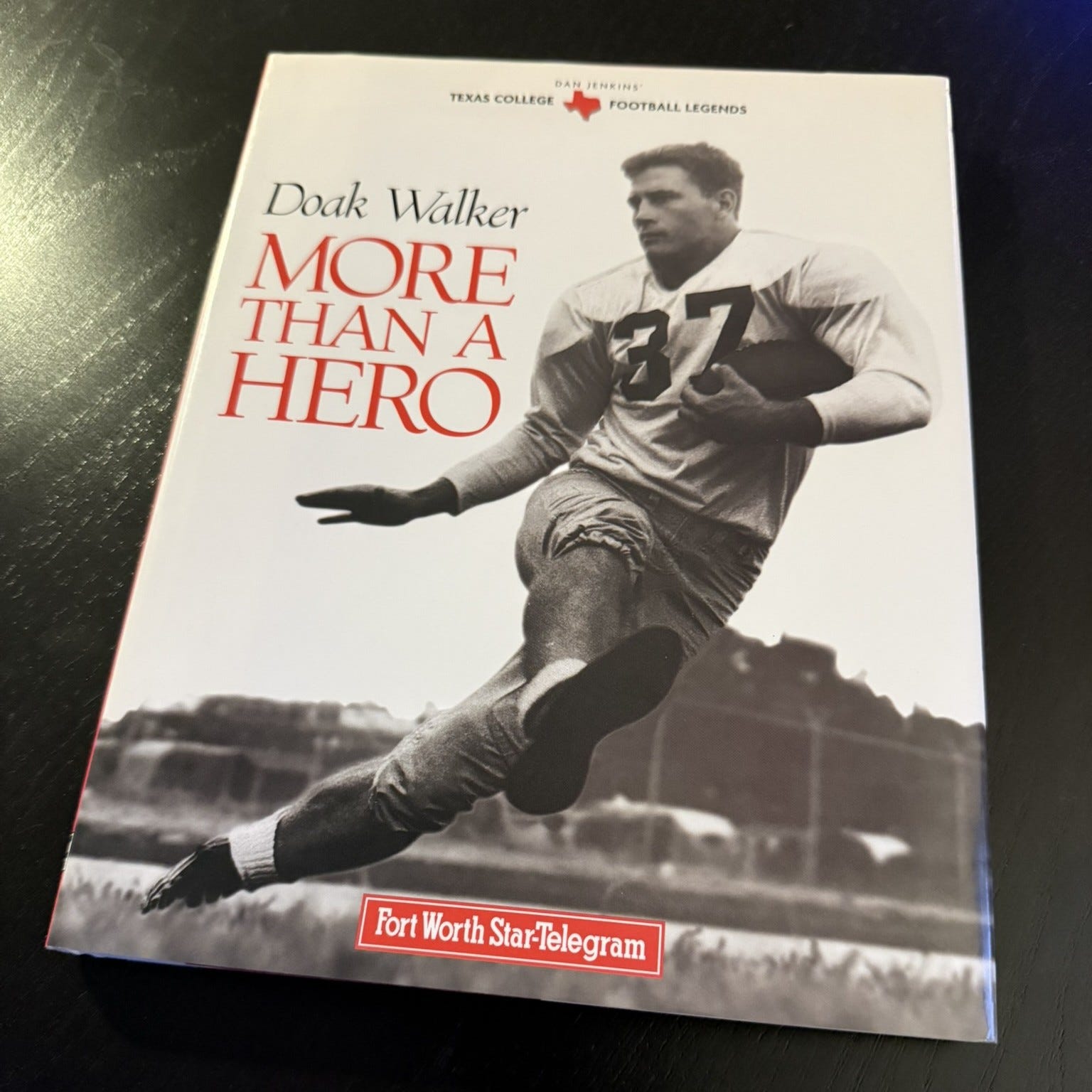
This week, that find was a 1997 copy of Doak Walker: More Than a Hero.
I’ll admit that I didn’t know much about Doak Walker beyond recognizing the name. It’s one of those names that seems permanently woven into the fabric of Dallas. A glance at the cover had me assuming he had been a Dallas Cowboy, but I later learned he actually starred for the Detroit Lions, whose uniforms happened to bear a resemblance to those early Cowboys uniforms.
So, I bought the book.
Only after getting home did I discover the real surprise.
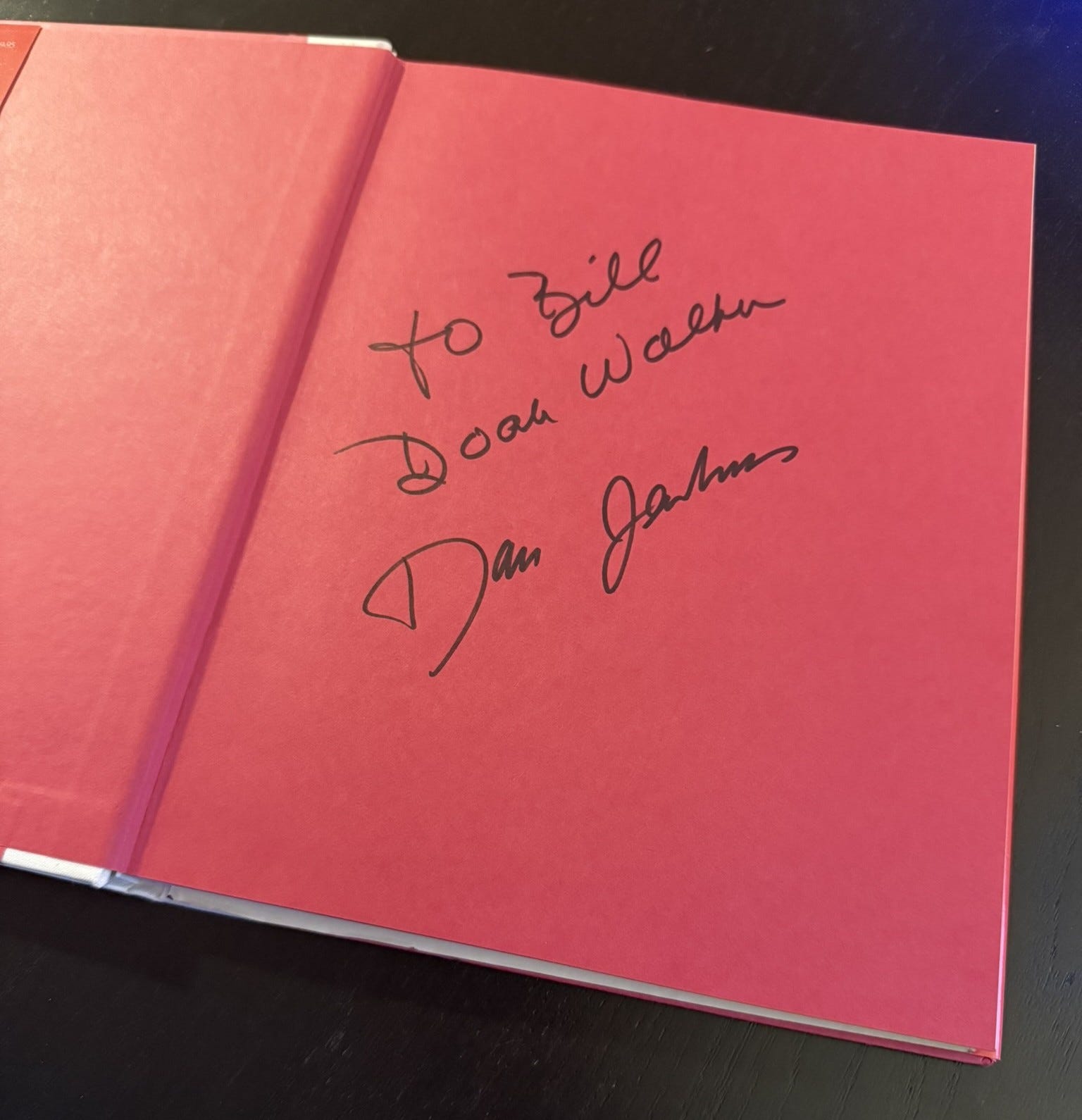
Inside, boldly written on the front endpaper, was an inscription to “Bill” signed by both Doak Walker and Dan Jenkins. My jaw dropped. The estate seller had apparently never opened the book.
Published in 1997 as part of the Texas College Football Legends series, the volume was written by veteran Fort Worth sportswriter Whit Canning and edited by legendary Texas journalist Dan Jenkins. I spent some time searching for comparable examples and was unable to find another copy signed by both men.
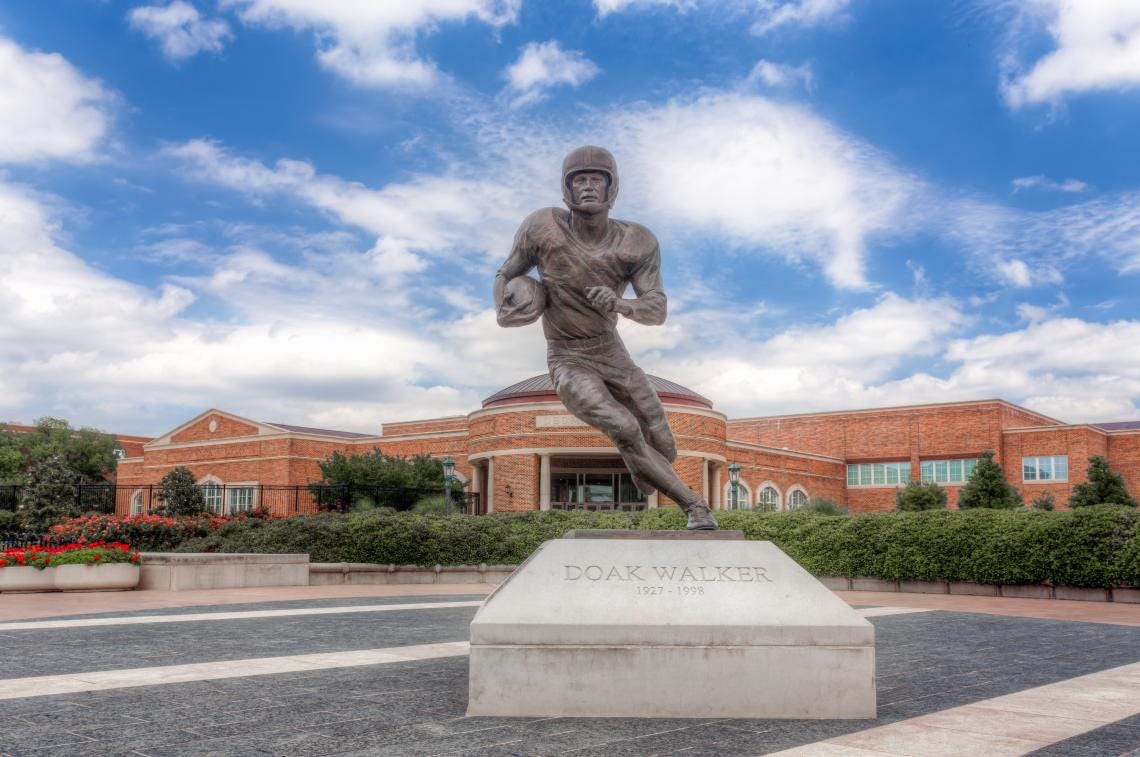
Dan Jenkins was certainly a Texas legend in his own right. But only one of the two has a nine-foot bronze statue at SMU. Jenkins was apparently wise enough to “let” Doak sign first.
The Texas Kid
Born on January 1, 1927, Doak Walker arrived in the world as a true Baby New Year. His full name was Ewell Doak Walker II, making it easy to understand why he preferred simply “Doak.”
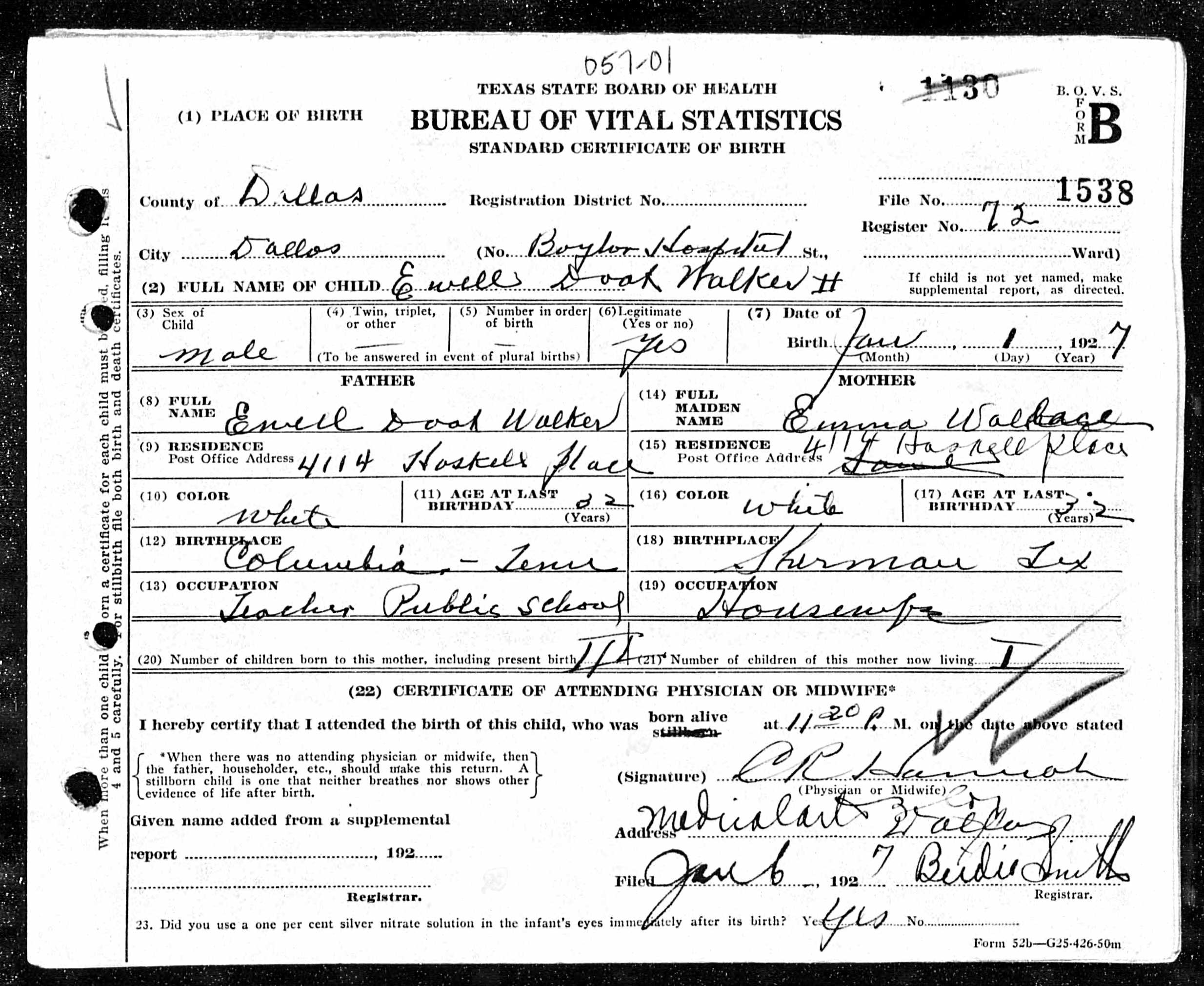
At the time of his birth, the Walker family lived at 4114 Haskell Place, now Haskell Avenue, in today’s Cityplace near the corner where Lemmon merges into Haskell. By 1928, they had moved to 5901 Goodwin Avenue in the Lower Greenville area, a home that also no longer survives.
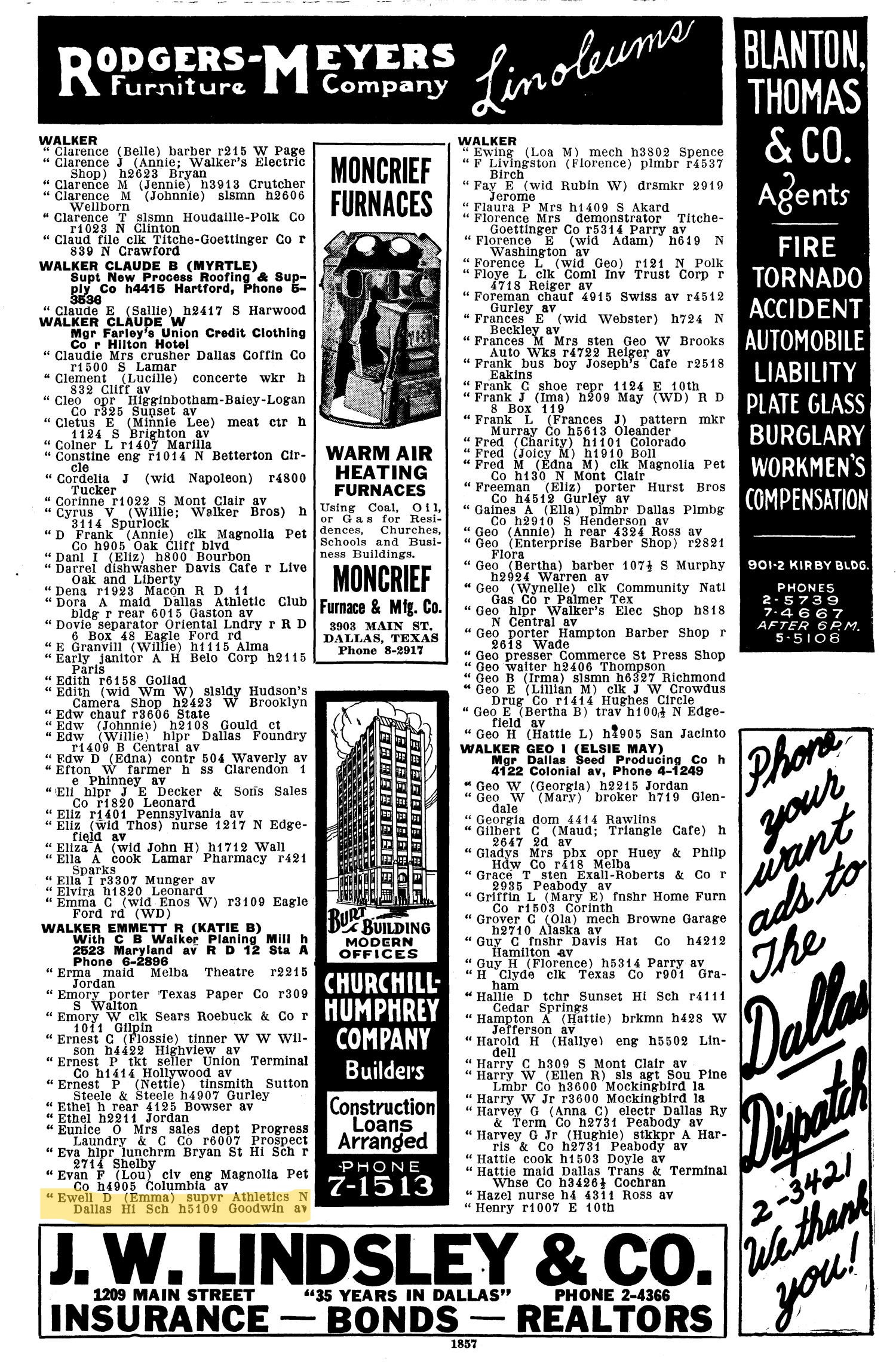
The 1928 Dallas City Directory identifies Doak’s father as Athletic Supervisor at North Dallas High School, the landmark campus at 3120 North Haskell Avenue that still stands today. When the school opened in 1922, it was considered so far north of Dallas that many residents thought of it as being “out in the woods.”
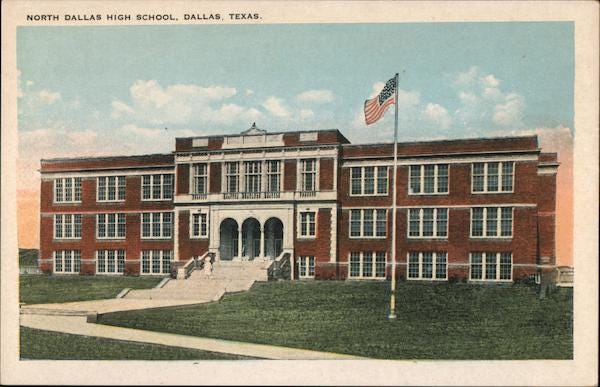
It is no coincidence that young Doak spent time around North Dallas athletics before eventually transferring to Highland Park High School, where his football talent began attracting widespread attention.
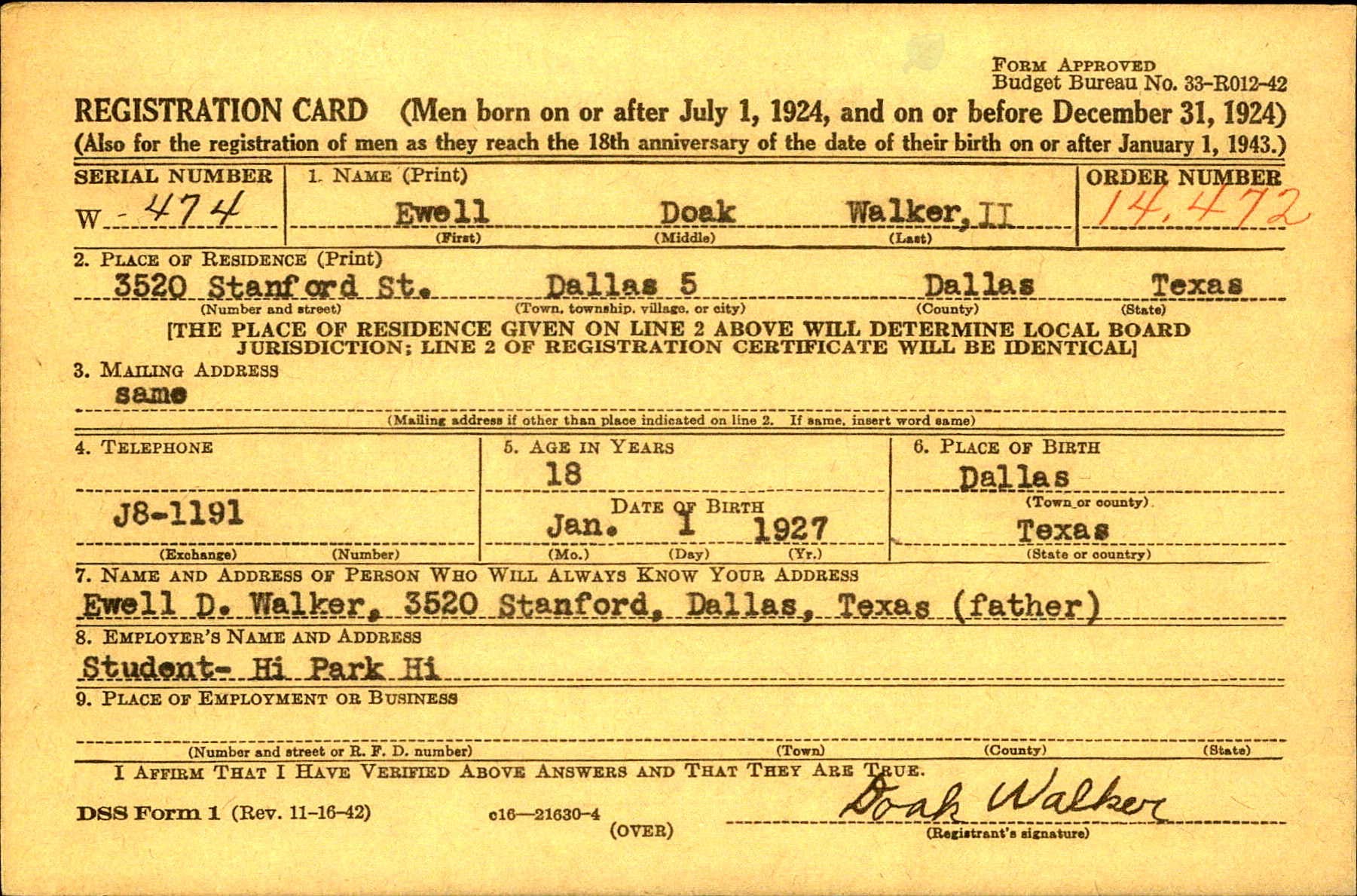
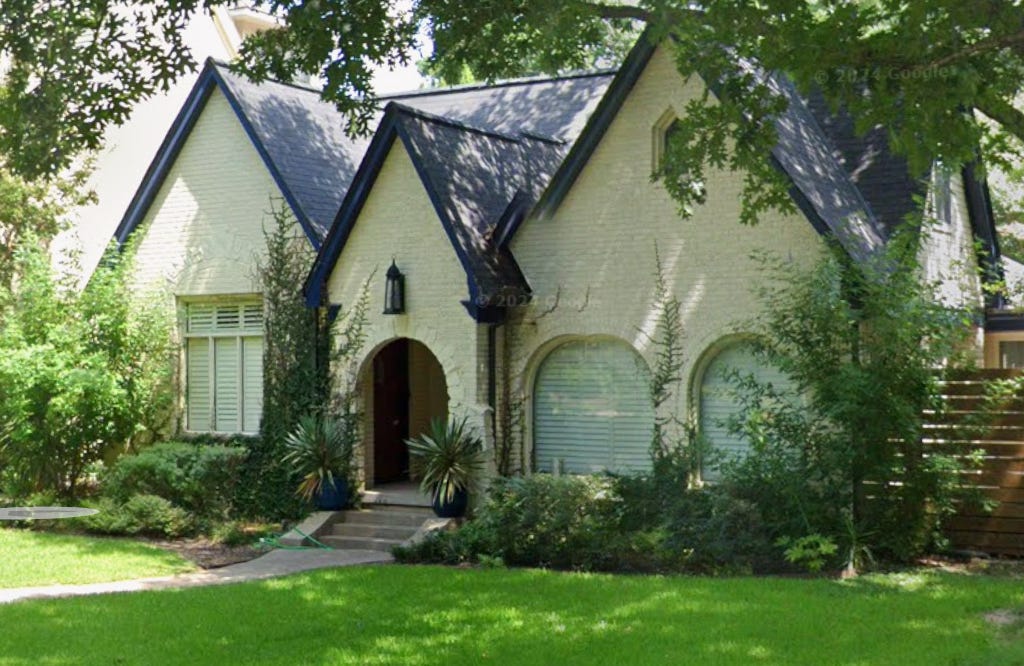
By the time he registered for the draft on his eighteenth birthday, the family was living at 3520 Stanford Avenue, a handsome 1931 Tudor that fortunately still stands today. It is the earliest surviving Walker residence that I have been able to identify.
After high school, Walker joined the U.S. Merchant Marine and served through the closing months of World War II. Returning home, he enrolled at Southern Methodist University and soon became one of the most celebrated athletes America had ever seen.
The Man Who Built the Cotton Bowl
Few athletes have ever occupied the place Doak Walker holds in Dallas history.
At SMU, Walker became a football phenomenon. He won the Maxwell Award in 1947 and the Heisman Trophy in 1948, becoming one of the most decorated players ever to wear a Mustang uniform.
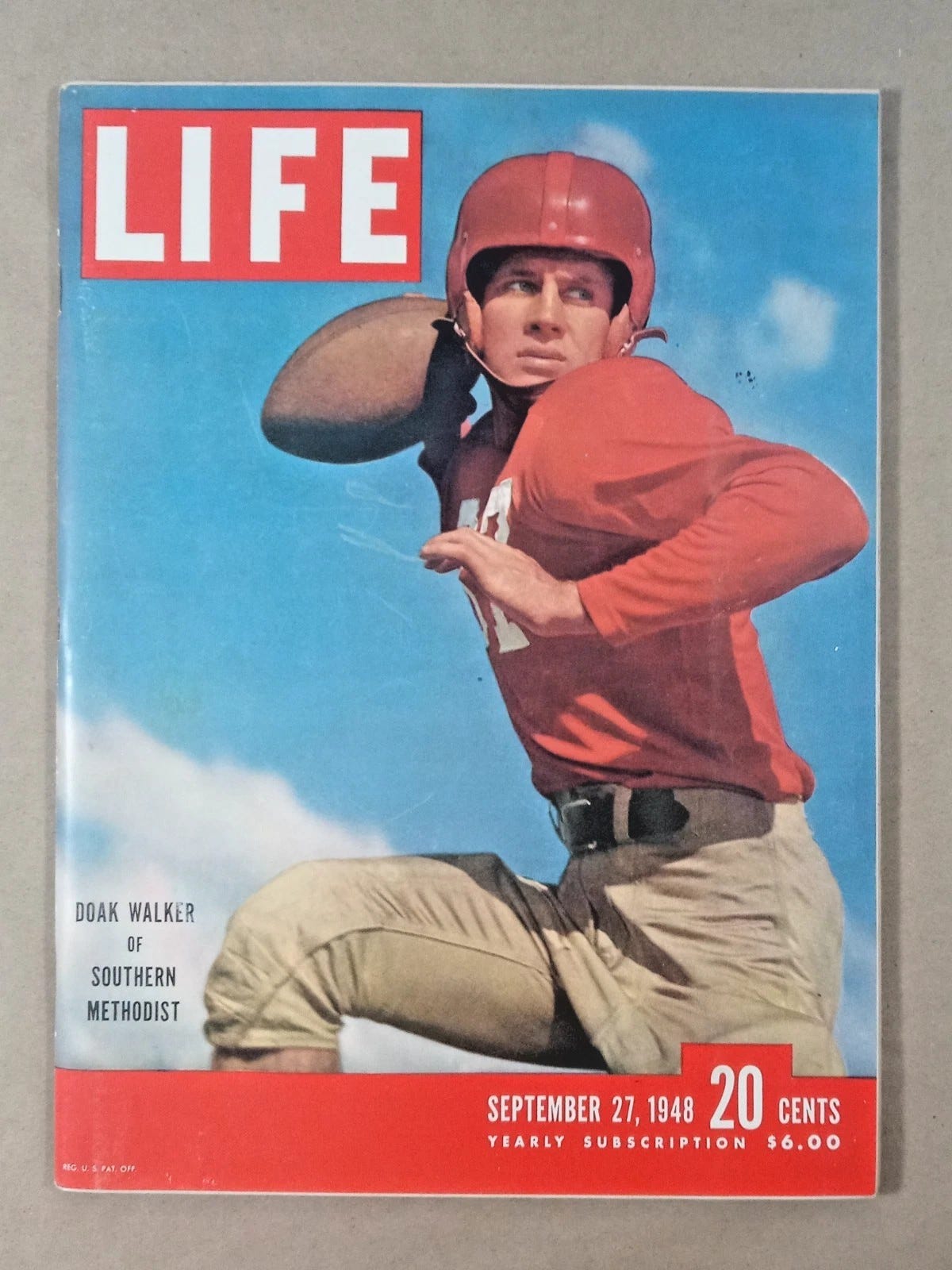
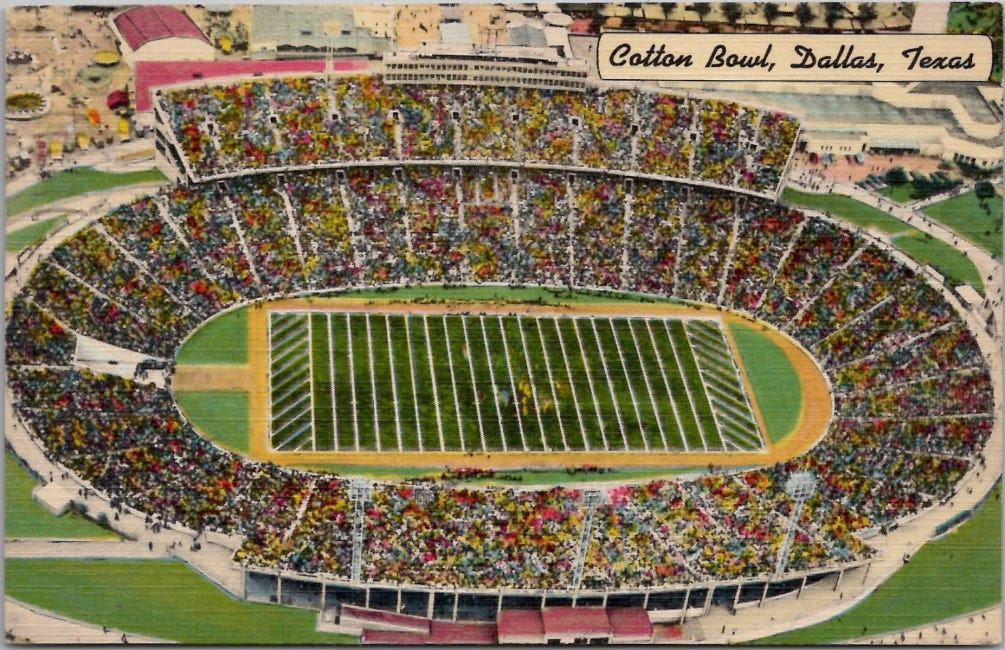
Crowds flocked to see him play. Interest grew so intense that SMU shifted its games from Ownby Stadium to the expanded Cotton Bowl. The venue would later become known as “The House That Doak Built,” a tribute to the drawing power of a young athlete who packed the stadium and brought national attention to both SMU and Dallas.
Walker wasn’t simply a running back. He ran, passed, kicked, returned punts and kickoffs, and scored 288 points in just 35 collegiate games. His versatility made him one of the most complete football players of any era.
His professional career proved equally remarkable. During six seasons with the Detroit Lions, Walker became Rookie of the Year, a five-time Pro Bowler, a five-time All-NFL selection, a two-time scoring champion, and helped lead Detroit to NFL championships in 1952 and 1953.
His accomplishments eventually earned him induction into both the College Football Hall of Fame and the Pro Football Hall of Fame. Since 1990, college football’s top running back has received the Doak Walker Award, ensuring that his name remains part of the game he helped define.
Why This Book Is Special
What else makes this particular book especially interesting is its timing.
Doak Walker: More Than a Hero was published in conjunction with Walker’s 70th birthday on January 1, 1997.
Just thirteen months later, on January 30, 1998, an active healthy Walker suffered the skiing accident that would ultimately lead to his death on September 27, 1998.
That accident created a remarkably narrow window during which copies could be signed by both Doak Walker and Dan Jenkins. Unlike books published long after a subject’s career has ended, this volume appeared while Walker was still attending events, meeting admirers, and signing autographs.
This copy captures a brief moment when one of Texas’ greatest athletes and one of Texas’ greatest sportswriters could leave their signatures on the same page.
A Dallas Story
When I bought this book, I only knew the name.
Now I understand why SMU erected a nine-foot bronze statue in his honor. I understand why the Doak Walker Award bears his name. I understand why Dallas still remembers him nearly three decades after his death.
There’s clearly enough material here for, let’s say…a 160-page book.
Finding this signed copy of More Than a Hero at a local estate sale feels especially appropriate. Walker’s story is intertwined with Dallas itself. Long before the Cowboys became America’s Team, before DFW Airport, before Dallas expanded into the modern metropolis we know today, there was a young man whose life unfolded largely within a few square miles of the city and whose talent made the entire country pay attention.
For a brief period between 1997 and September 1998, fans could buy this newly published book, meet Doak Walker in person, and ask him to sign it and maybe just catch Dan Jenkins too!
This copy is a surviving reminder of that moment.
Sometimes history isn’t hidden in archives or museums.
Sometimes it’s sitting on a table at an estate sale, waiting to be Rediscovered.
Shop:
View the signed Doak Walker & Dan Jenkins first edition in the shop
Sources:
City Directory Source: John F. Worley Directory Co. Dallas City Directory, 1928, book, 1928; 905 Main St., Dallas, Texas. (https://texashistory.unt.edu/ark:/67531/metapth806918/: accessed July 16, 2026), University of North Texas Libraries, The Portal to Texas History, https://texashistory.unt.edu; crediting Dallas Public Library.
Ancestry.com for Birth Certificate, Draft Registration Card, and background Census Records.
eBay images of Life Magazine & Cotton Bowl Postcard.
Unattributed/Undated image of Doak Walker Statue on the campus of Southern Methodist University.